
Many North American homeowners ask themselves why turning their living spaces into truly smart homes still feels complicated. As digital technologies evolve, homes can now be intelligent environments that adapt to every need, but misconceptions about cost and complexity often keep people from exploring these options. This article clarifies exactly what separates a smart home from non-smart alternatives, debunks common myths, and explains how thoughtful design enhances privacy, control, and security for modern households.
Table of Contents
- Defining Smart Home And Common Misconceptions
- Local AI Hubs Versus Cloud-Connected Systems
- Key Features: Automation, Security, Companionship
- Privacy, Data Control, And User Empowerment
- Risks, Costs, And Alternatives To Smart Homes
Key Takeaways
| Point | Details |
|---|---|
| Smart Homes Enhance Living | Smart home technology optimizes comfort, efficiency, and security through interconnected systems, offering practical tools rather than luxury add-ons. |
| Local AI Hubs vs. Cloud Systems | Local AI hubs provide better data privacy, instant responsiveness, and reduced internet dependence compared to cloud-connected systems. |
| Automation, Security, Companionship | Modern smart homes integrate automation, advanced security features, and companionship capabilities to improve overall home experience. |
| Focus on Privacy and Control | User empowerment in smart homes is essential; homeowners should have transparent control over their data and privacy settings. |
Defining Smart Home and Common Misconceptions
Smart home technology represents a transformative approach to residential living, where interconnected devices and systems work seamlessly to enhance comfort, efficiency, and security. Recent technological advancements have evolved homes from passive spaces into dynamic, intelligent environments that respond to residents’ needs and preferences.
At its core, a smart home is more than just a collection of internet-connected gadgets. It’s an integrated ecosystem designed to optimize living experiences through automation, remote control, and intelligent decision-making. These systems typically include components like:
- Smart thermostats that adjust temperature automatically
- Security cameras with real-time monitoring capabilities
- Voice-activated lighting and appliance controls
- Energy management systems that reduce consumption
- Automated door locks and window sensors
However, widespread misconceptions often prevent potential users from embracing this technology. Many people incorrectly assume smart homes are prohibitively expensive or incredibly complex to implement. Scientific research reveals that these perceptions are largely unfounded, with modern smart home solutions becoming increasingly accessible and user-friendly.
Smart homes are not about complexity, but about simplifying and enhancing everyday living experiences.
Understanding the true capabilities of smart home technology requires moving beyond outdated assumptions. These systems are not just luxury add-ons but practical tools for improving home efficiency, security, and personal comfort. They offer granular control over living environments, allowing residents to customize settings, monitor resources, and create personalized automation routines.
Pro tip: Start your smart home journey by identifying one specific need—like energy management or security—and select a targeted solution that addresses that particular requirement.
Local AI Hubs Versus Cloud-Connected Systems
Smart home technologies are rapidly evolving, with a critical distinction emerging between local AI hubs and traditional cloud-connected systems. Advanced IoT research highlights the significant advantages of processing data locally, transforming how we approach home automation and personal privacy.
Local AI hubs represent a revolutionary approach to smart home technology, offering distinct benefits over cloud-based alternatives:
- Immediate data processing with minimal latency
- Enhanced privacy through local data storage
- Real-time responsiveness for critical home functions
- Reduced dependency on internet connectivity
- Lower potential for external data breaches
Cloud-connected systems, while initially popular, have significant drawbacks that local AI hubs effectively address. These traditional systems typically route all device communications through remote servers, creating potential vulnerabilities in data transmission and privacy. In contrast, local AI hubs process information directly within the home environment, creating a more secure and efficient ecosystem.
Local AI hubs transform your home into an intelligent, self-contained system that prioritizes your privacy and immediate needs.
The technological landscape is shifting towards hybrid architectures that balance the scalability of cloud computing with the immediacy and security of edge computing. These advanced systems leverage local processing capabilities while maintaining optional cloud connectivity for specific advanced features. Homeowners now have unprecedented control over their digital environments, with the ability to customize privacy settings and data management protocols.

Here is a comparison of local AI hubs and cloud-connected smart home systems:
| Aspect | Local AI Hubs | Cloud-Connected Systems |
|---|---|---|
| Data Privacy | Managed locally, enhanced | Stored remotely, more risk |
| Response Time | Instant, no latency | Dependent on internet speed |
| Internet Dependence | Minimal, works offline | Required for most functions |
| Customization | Greater local control | Limited to manufacturer settings |
Pro tip: When selecting a smart home system, prioritize solutions that offer robust local processing capabilities and transparent data privacy controls.
Key Features: Automation, Security, Companionship
Smart home technologies have revolutionized residential living by integrating three critical dimensions: automation, security, and companionship. Smart home systems now offer multifunctional capabilities that transform how we interact with our living spaces, providing unprecedented levels of convenience, protection, and emotional support.
Automation stands as the cornerstone of modern smart home technology, delivering remarkable benefits:
- Voice-activated control of household appliances
- Automatic temperature and lighting adjustments
- Energy consumption optimization
- Personalized scheduling of home functions
- Simplified daily task management
Security features have become increasingly sophisticated, moving far beyond traditional alarm systems. Contemporary smart home solutions incorporate advanced surveillance technologies that provide comprehensive protection. Integrated security technologies now include smart locks, motion sensors, real-time monitoring, and instant alert systems that give homeowners unprecedented control and peace of mind.
Smart homes are no longer just about technology—they’re about creating an intelligent, responsive environment that adapts to your lifestyle and protects what matters most.
The most innovative aspect of modern smart home systems is their emerging companionship capabilities. AI-powered assistants can now provide more than just technological convenience; they offer emotional support, personalized interactions, and adaptive communication tailored to individual user needs. These systems understand context, learn preferences, and create a more intuitive home environment that feels less like a collection of devices and more like an intelligent, supportive companion.
Pro tip: Select a smart home system that offers a balanced approach, integrating automation, security, and companionship features to create a truly holistic living experience.
This summary highlights core areas addressed by smart home features:
| Feature Area | Example Function | Impact on Home Life |
|---|---|---|
| Automation | Scheduled lighting, appliances | Saves time and energy |
| Security | Smart locks, cameras | Provides enhanced peace of mind |
| Companionship | Voice assistants, routines | Offers interaction and support |
Privacy, Data Control, and User Empowerment
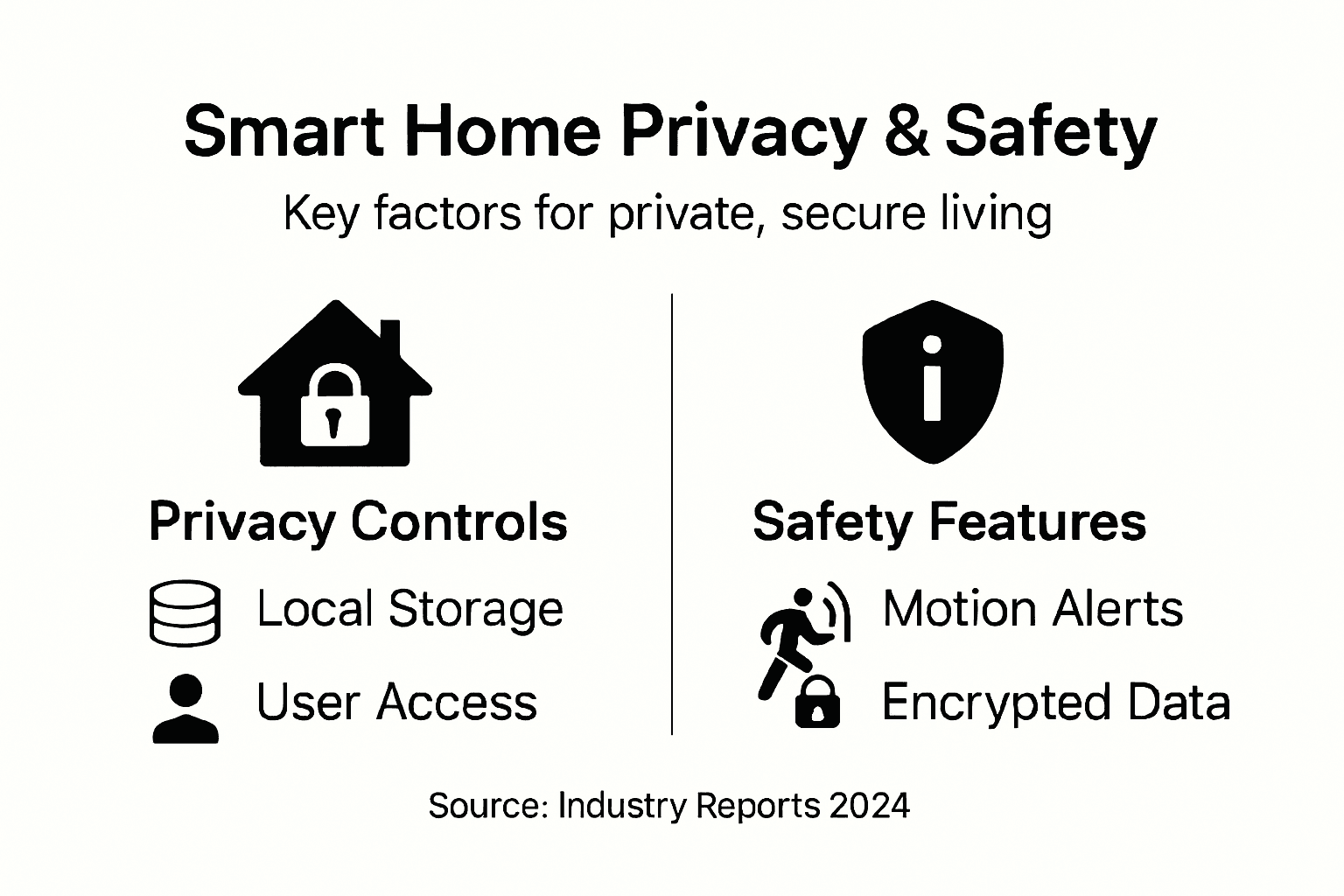
Smart home privacy has emerged as a critical concern for modern technology users, with increasing demand for transparent and user-controlled data management systems. IoT privacy protection research reveals the fundamental importance of giving users comprehensive control over their personal information, transforming smart home technologies from potential privacy risks to empowering technological solutions.
Key aspects of effective privacy and data control include:
- Transparent data collection policies
- User-configurable privacy settings
- Clear visualization of data access logs
- Granular permissions for device interactions
- Real-time alerts about data usage
The evolving landscape of smart home technologies demands a user-centric approach to data management. Privacy-conscious user research highlights the critical need for intuitive interfaces that allow homeowners to understand and manage their digital footprint effectively. This means providing clear, accessible mechanisms that enable users to:
- View exactly what data is being collected
- Understand who has access to their information
- Control and limit data sharing
- Delete personal information on demand
- Customize privacy preferences across different devices and services
True user empowerment in smart home technologies means giving individuals complete visibility and control over their personal data ecosystem.
Advanced smart home systems are now designing privacy controls that balance sophisticated security protocols with user-friendly interfaces. These systems recognize that privacy is not just about restriction, but about creating a transparent, trustworthy environment where users feel confident and in control of their technological interactions.
Pro tip: Regularly audit your smart home system’s privacy settings and review data access logs to maintain maximum control over your personal information.
Risks, Costs, and Alternatives to Smart Homes
Smart home technologies present an exciting yet complex landscape of potential risks and challenges that consumers must carefully navigate. Digital technology research reveals multiple critical considerations that extend beyond simple technological adoption, highlighting the nuanced nature of integrating intelligent systems into residential environments.
The primary risks associated with smart home technologies include:
- Potential privacy breaches and unauthorized data collection
- Cybersecurity vulnerabilities and hacking threats
- Malware and denial of service attack risks
- Complex device interconnectivity challenges
- High initial implementation costs
European technology adoption studies demonstrate that consumers face significant barriers when considering smart home investments. These barriers typically encompass concerns about:
- Device reliability and long-term performance
- Comprehensive data privacy mechanisms
- Substantial upfront and maintenance expenses
- Technical complexity of system integration
- Limited understanding of actual technological benefits
Smart home adoption is not just about technological capability, but about building trust through transparent, user-centric design.
Alternatives to comprehensive smart home systems include modular approaches that allow gradual technological integration. Consumers can start with specific, targeted devices like smart thermostats or security cameras, which provide immediate value while minimizing overall system complexity and financial investment. These incremental strategies enable users to experience technological benefits without overwhelming initial commitments.
Pro tip: Begin your smart home journey by selecting one or two specific, high-value devices that address your most pressing home management needs, allowing for gradual and controlled technological expansion.
Experience True Privacy and Safety with Intelligent Smart Home Solutions
The article highlights the critical challenge of protecting your privacy and ensuring security in smart home technology. Many systems rely heavily on cloud connectivity, putting your personal data at risk and leaving your safety dependent on an internet connection. You need a smart home solution that offers local AI processing, real-time responsiveness, and full user control over data without compromising convenience or companionship.
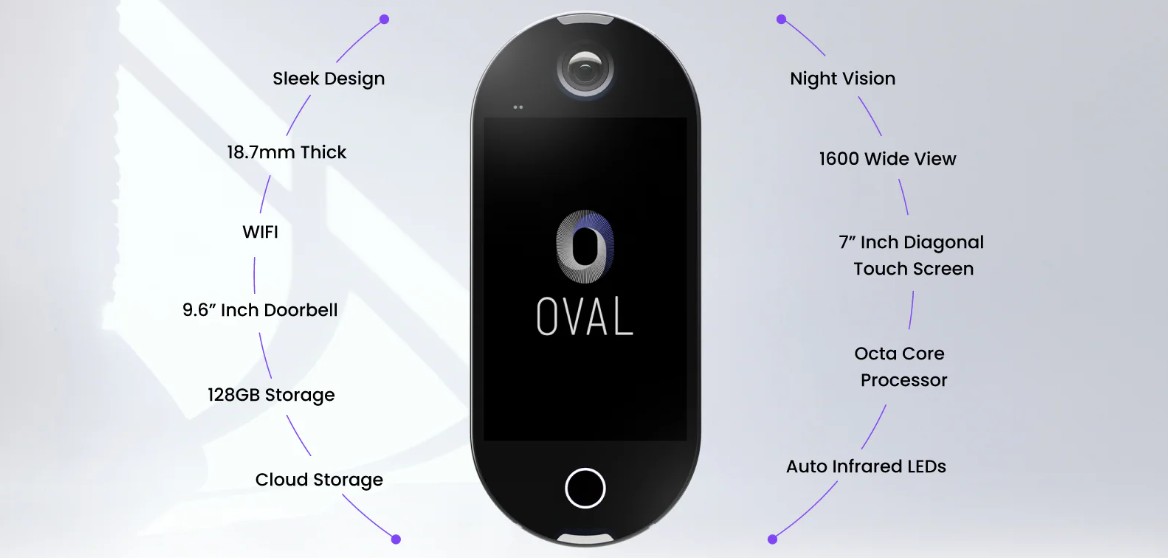
IRVINEi’s OVAL is designed precisely to meet these pain points. This revolutionary AI Hub runs entirely on edge AI technology, bringing together security, automation, and companionship in one elegant device. It acts as your personal assistant and bodyguard while keeping all your data private and secure inside your home. Discover how OVAL transforms your living space into an intelligent, trustworthy environment that safeguards what matters most.
Explore OVAL’s features and experience the future of intelligent living. Protect your home, empower your privacy, and enjoy peace of mind today by visiting IRVINEi.
Frequently Asked Questions
What makes smart homes an effective solution for privacy?
Smart homes utilize local AI hubs that process data within the home, enhancing privacy by storing information locally and minimizing external data transmission.
How do local AI hubs improve my home’s security?
Local AI hubs reduce dependency on internet connectivity, making smart home functions more responsive to threats, such as unauthorized access or data breaches, by processing information instantly.
Are there risks associated with adopting smart home technology?
Yes, some risks include potential privacy breaches, cybersecurity vulnerabilities, and the complexity of device interconnectivity. However, with careful selection and management, these risks can be mitigated.
How can I maintain control over my data when using smart home devices?
Choose smart home systems that offer user-configurable privacy settings, transparent data collection policies, and detailed access logs, allowing you to monitor and control what data is collected and how it’s used.
Recommended
- Why Choose Smart Home Security: Privacy, Power, and Peace – IRVINEi
- Smart Living, Safe Living: The Future of OVAL Smart Home Technology – IRVINEi
- 7 Top Home Automation Tips for Tech-Savvy Homeowners – IRVINEi
- Master the Smart Home Security Workflow for Total Control – IRVINEi
- I Migliori Security Plugins WordPress – Confronto 2025
